
Liberia: Medica Liberia Marks 20 Years, Calls for Stronger Justice and Protection for Women and Girls
Monrovia, Liberia — Medica Liberia has marked 20 years of advancing women’s rights, supporting survivors of sexual and gender-based violence, and promoting feminist leadership with the official launch of…

Published by FrontPage Africa
Original author: Patience M Jones
Content ownership remains with the original publisher.
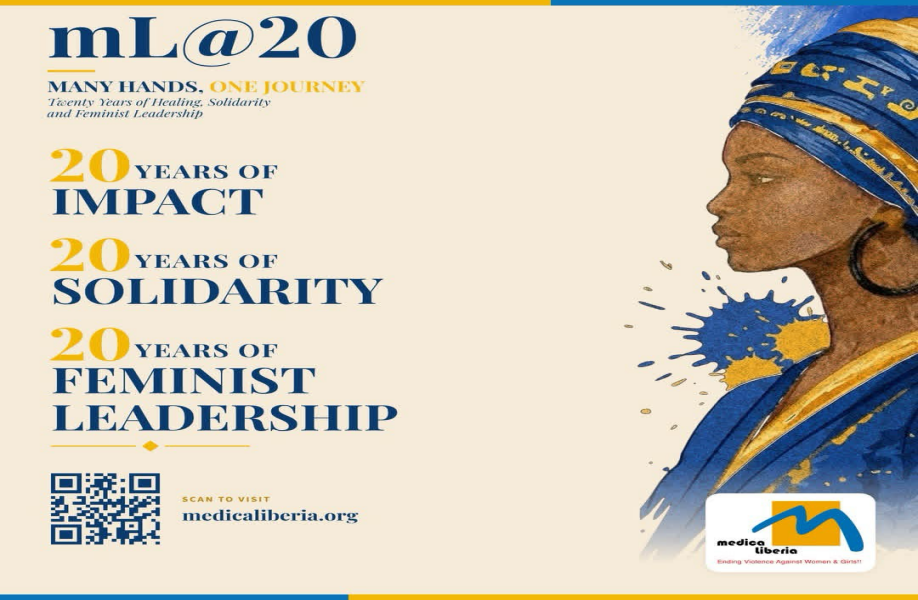
Monrovia, Liberia — Medica Liberia has marked 20 years of advancing women’s rights, supporting survivors of sexual and gender-based violence, and promoting feminist leadership with the official launch of its anniversary celebrations and the Many Hands Fund, aimed at sustaining its work beyond the milestone.
By Patience M. Jones
The anniversary celebration, held Thursday at the Ellen Johnson Sirleaf Ministerial Complex in Congo Town, was held under the theme, “Many Hands, One Journey: Twenty Years of Healing, Solidarity and Feminist Leadership.”
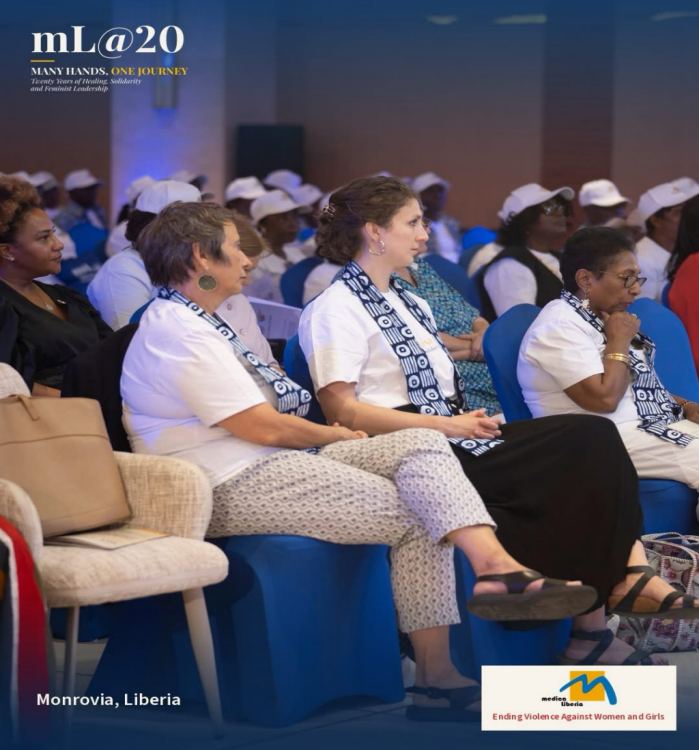
The event brought together former President Ellen Johnson Sirleaf, government officials, diplomatic representatives, civil society leaders, women’s rights advocates, development partners, community representatives, and former and current staff of Medica Liberia.
Delivering special remarks, former President Ellen Johnson Sirleaf commended Medica Liberia for its two decades of partnership with Liberia, particularly its contributions to community-based healthcare and support for vulnerable communities during and after the Ebola outbreak.
She recalled that during the Ebola crisis, when health systems were under severe pressure and many health professionals were reluctant to work in affected communities, organizations such as Medica Liberia and Last Mile Health remained engaged in underserved areas.
Johnson Sirleaf said community health workers played a critical role in Liberia’s response to the outbreak and continued to serve as an important foundation for addressing healthcare challenges, particularly in communities with limited access to medical services.
She urged continued support for organizations working in underserved communities and emphasized the importance of women’s leadership in shaping laws, policies, and institutions that respond to women’s needs.
The former President also expressed confidence in Liberia’s ability to overcome its challenges, assuring that the country would continue to rise.
In her welcome remarks, Cllr. Ruth Jappah Samukai, representing the Board of Directors of Medica Liberia, said the anniversary provided an opportunity to recognize the collective efforts of individuals, communities, and partners who have contributed to the organization’s 20-year journey.
She recalled that Medica Liberia’s work began with a commitment to supporting women and girls affected by violence and the devastating consequences of Liberia’s civil war.
Samukai said the anniversary programme was designed to reflect on the organization’s history, address present realities, and consider its future through a documentary, timeline exhibition, and intergenerational and transnational feminist dialogue.
She announced the official launch of the Many Hands Fund, intended to sustain the organization’s work beyond its 20th anniversary.
She also disclosed that the anniversary activities would include engagements with the Office for the Establishment of the War and Economic Crimes Court in Liberia to ensure survivors’ voices and priorities inform the country’s transitional justice process.
Another engagement, organized in partnership with the Embassy of Ireland, would focus on translating lessons from Medica Liberia’s 20 years of work into stronger policies and practices for preventing and responding to violence against women and girls.
Delivering the anniversary special address, Monika Hauser, Founder and Executive Board Member of Medica Mondiale, described the milestone as a celebration of two decades of courage, perseverance, feminist resistance, and solidarity with survivors of sexualized violence.
Hauser emphasized that the consequences of conflict-related sexual violence do not end when wars stop, noting that trauma, stigma, silence, and impunity often continue to affect survivors, families, and communities long after conflicts have ended.
She stressed that survivors do not need pity but dignity, support, and justice, adding that their experiences and perspectives must be central to efforts to address violence and transform society.
Reflecting on Medica Liberia’s achievements, Hauser highlighted its contributions to strengthening community awareness, improving institutional responses to sexual and gender-based violence, and integrating stress- and trauma-sensitive approaches into the training of the Liberia National Police.
She described the integration of trauma-sensitive approaches into police training as an important institutional transformation that promotes dignity, respect, and a better understanding of survivors’ needs.
Hauser also highlighted efforts to strengthen protection mechanisms against sexual exploitation and abuse in schools, emphasizing that institutions must take responsibility for preventing violence rather than ignoring it.
Looking ahead, she urged Liberia to ensure that survivors of conflict-related sexual violence are placed at the center of the country’s transitional justice process, particularly with the establishment of the War and Economic Crimes Court.
She cautioned that the opportunity to advance truth, recognition, and justice for survivors must not be sacrificed to political interests, stressing that meaningful reconciliation cannot be achieved without their participation.
According to Hauser, justice must reflect survivors’ experiences, while lasting peace requires confronting the root causes of violence and breaking cycles of abuse.
She further called on men to become active partners in ending violence against women by challenging abusive practices and promoting respectful relationships.
Also speaking, Kevin Culligan, Chargé d’Affaires of the Embassy of Ireland, reaffirmed Ireland’s commitment to gender equality and efforts to address gender-based violence in Liberia.
Culligan said the anniversary theme underscores the importance of collective action, noting that lasting progress requires cooperation among government, civil society organizations, communities, survivors, and development partners.
He acknowledged Ireland’s own historical challenges with gender inequality and violence against women, noting that although progress has been made, continued efforts are necessary.
He said supporting gender equality and addressing gender-based violence remain important components of Ireland’s foreign policy and the Embassy’s mission in Liberia.
Culligan specifically highlighted Ireland’s partnership with Medica Liberia in strengthening the prevention of and response to gender-based violence, promoting women’s leadership, and supporting community-level social norm change in southeastern Liberia, particularly in Sinoe, Grand Gedeh, and River Gee counties.
He congratulated Medica Liberia on its 20-year milestone and called for renewed commitment to building a society where women and girls can live in safety, dignity, and equality.
The anniversary celebration also featured the official launch of the Many Hands Fund, with the participation of international partners and supporters, as Medica Liberia renewed its commitment to advancing the rights, protection, and leadership of women and girls.
The celebrations are expected to culminate in southeastern Liberia, where the organization’s journey began, with engagements involving women and communities in Grand Gedeh, River Gee, and Sinoe counties.
Published by FrontPage Africa
Original headline, article body, author, publication date, featured media and tags are displayed with attribution. Content ownership remains with the original publisher.
Read on the publisher's site