
China Courts Liberia With Mining Investment, US$3M Food Aid as Cocoa Exports to China Near
MONROVIA – China is seeking to deepen its economic and strategic partnership with Liberia, placing mining investment, agricultural development, food assistance, infrastructure and expanded market access at the…

Published by FrontPage Africa
Original author: Willie N. Tokpah
Content ownership remains with the original publisher.
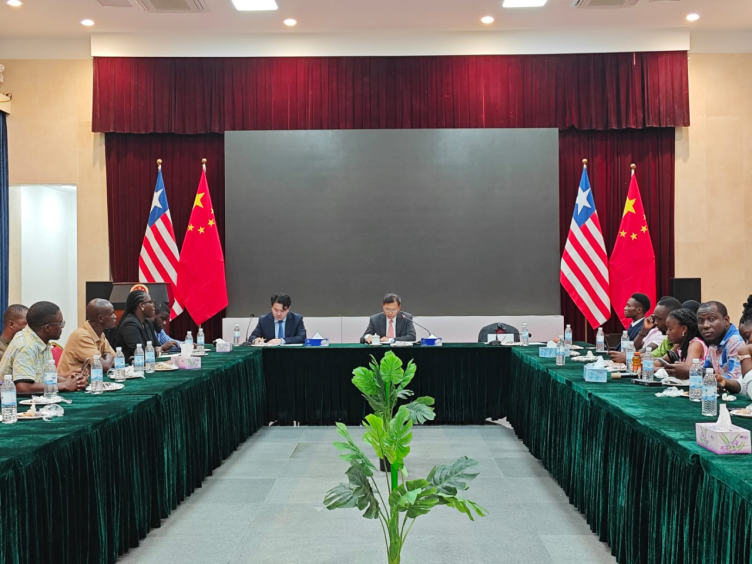
MONROVIA – China is seeking to deepen its economic and strategic partnership with Liberia, placing mining investment, agricultural development, food assistance, infrastructure and expanded market access at the center of its latest diplomatic engagement with Monrovia.
By Willie N. Tokpah
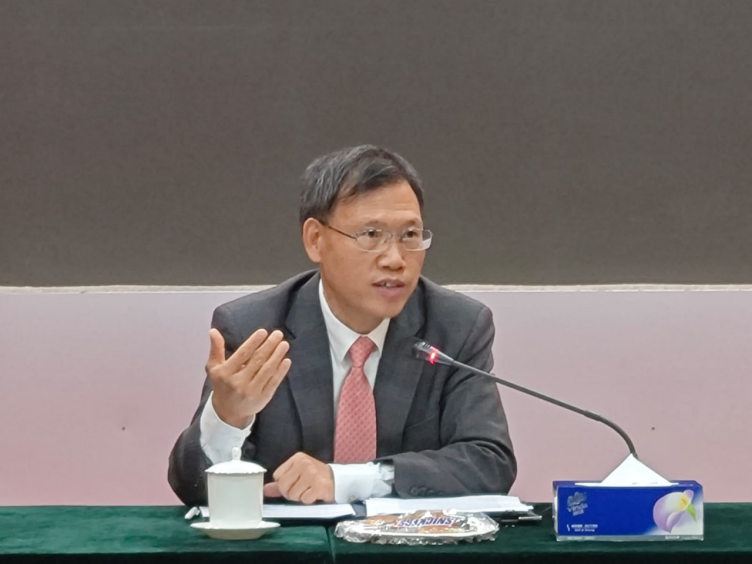
At a media briefing in Monrovia on Wednesday, November 11, the Chinese Embassy outlined several areas of cooperation, including a proposed new direction for China-Africa mining partnerships, approximately US$3 million in rice assistance to Liberia, and opportunities for Liberian cocoa producers to access the Chinese market beginning December 15, 2026.
The briefing also highlighted President Xi Jinping’s recent diplomatic engagement with U.S. President Donald Trump, which Beijing described as an effort to establish a constructive relationship of strategic stability based on respect, fairness and reciprocity.
For Liberia, the developments could create opportunities in mining, agriculture, infrastructure and international trade as the Boakai administration pursues its ARREST Agenda for Inclusive Development.
However, the central question remains whether expanding diplomatic relations will translate into measurable economic benefits, local employment, technology transfer and improved living conditions for ordinary Liberians.
China Pushes African Ownership of Mineral Resources
One of the major messages from the briefing was China’s renewed proposition for mining cooperation with Africa, an issue of particular importance to Liberia, whose economy remains heavily dependent on natural resources.
President Xi Jinping’s four-point proposal places African ownership of mineral resources at the center of future cooperation.
The first principle emphasizes that African resources belong to Africans. China says it is prepared to share technical expertise and experience to help African countries develop mining plans suited to their national circumstances and development priorities.
The second principle focuses on mutual benefits, encouraging Chinese companies to improve operational standards, transfer green technologies and promote South-South cooperation.
The third calls for high-quality development, moving mining partnerships beyond the extraction and export of raw minerals toward industrial value addition, sustainable financing and economic modernization.
The fourth advocates a fair and open investment environment, warning against turning African mineral resources into instruments of geopolitical rivalry.
The proposal is particularly relevant to Liberia, where iron ore, gold, diamonds and other minerals remain major sources of investment and export revenue.
For decades, one of the country’s major economic challenges has been ensuring that mineral extraction generates benefits beyond royalties, concession payments and foreign exchange earnings.
If translated into practical investment arrangements, China’s position could open opportunities for mineral processing, geological research, skills development, infrastructure and greater participation of Liberian businesses in mining supply chains.
However, the government must ensure that any resulting agreements protect national interests, strengthen environmental safeguards and provide meaningful economic benefits to communities hosting mining operations.
Chinese Ambassador to Liberia Yin Chengwu reinforced Beijing’s interest in the sector when he attended the Liberia International Mining and Energy Conference and Expo on October 28. He expressed China’s readiness to deepen cooperation in mineral resource governance, mining investment, value addition, energy and sustainable development.
President Joseph Nyuma Boakai, who also attended the conference, emphasized Liberia’s commitment to attracting investment and ensuring that mineral wealth becomes a driver of national development.
China Announces US$3 Million Rice Assistance
Beyond mining, China announced plans to provide Liberia with another batch of emergency food assistance consisting of rice valued at RMB20 million, approximately US$3 million.
The announcement comes as food security and domestic agricultural production remain major national concerns.
For a country that continues to spend substantial resources importing food, particularly rice, the proposed assistance could provide relief, depending on its quantity, timing and distribution arrangements.
The embassy also highlighted the handover of 304 units of agricultural machinery and equipment to Liberia at the end of October. President Boakai personally attended the ceremony.
Additionally, China’s technical assistance projects in bamboo and rattan weaving, fruit and vegetable cultivation, and livestock production are supporting demonstration households in Bong and Bomi Counties.
The embassy disclosed that China’s Mainland Group plans to invest approximately US$100 million in Liberia over five years, focusing on rice, cassava, cocoa, coffee, sugar production, warehousing and logistics.
According to Ambassador Yin’s November 10 publication, approximately US$10 million has already been invested, with a cassava starch deep-processing project under construction.
The investments could support Liberia’s efforts to increase domestic food production, expand agro-processing and create employment for farmers and young people.
However, their effectiveness will depend on whether agricultural equipment reaches productive farms, farmers receive adequate training and local producers gain access to reliable markets.
Liberian Cocoa Set for Chinese Market
Another significant development concerns Liberia’s cocoa industry.
The Chinese Embassy announced that, effective December 15, 2026, Liberian cocoa beans meeting China’s prescribed phytosanitary requirements will be eligible for export to China without requiring a separate bilateral phytosanitary protocol specifically for cocoa.
The development follows an announcement by China’s General Administration of Customs concerning import requirements for cocoa beans from African countries.
The arrangement could provide Liberian cocoa producers and exporters with an additional international market, potentially expanding opportunities for farmers in rural communities.
However, market access alone does not guarantee export success.
Liberia will need to strengthen agricultural inspection, quality control, traceability and compliance with international standards to satisfy Chinese import requirements.
The embassy also disclosed that China has upgraded its Green Channel 2.0 initiative to facilitate exports of African agricultural and food products.
This could create additional opportunities for Liberian cocoa, coffee, cassava, cashew nuts and other agricultural commodities.
Liberia’s Exports to China Exceed US$629 Million
Figures published by Ambassador Yin Chengwu indicate that Liberia’s exports to China exceeded US$629 million during the first nine months of 2026, representing an increase of more than eightfold compared with the corresponding period last year.
According to China Customs statistics cited in his November 10 article, iron ore accounted for approximately US$594 million, while rubber exports amounted to US$32 million.
The figures demonstrate China’s growing importance as a destination for Liberian exports, particularly minerals.
China has also reaffirmed its zero-tariff treatment for African countries with which it maintains diplomatic relations, including Liberia, as part of its broader effort to expand market access for developing economies.
While the policy could improve opportunities for Liberian exporters, the country’s export profile exposes a major structural weakness: its overwhelming dependence on iron ore.
To maximize the benefits of its relationship with China, Liberia will need to move beyond raw mineral exports toward agricultural processing, manufacturing, logistics and stronger domestic supply chains.
Xi-Trump Engagement Offers New Global Economic Prospects
The Chinese Embassy also highlighted President Xi Jinping’s September 23–25 state visit to the United States, where he held discussions with President Donald Trump.
The engagement produced an understanding to build a constructive China-U.S. relationship of strategic stability based on respect, fairness and reciprocity.
The discussions followed a period of intense trade tensions, tariff disputes and strategic competition between the world’s two largest economies.
Among the announced outcomes were commitments to continue economic and trade consultations, establish cooperation mechanisms in areas including artificial intelligence, strengthen counter-narcotics cooperation and support each other’s hosting of major international summits.
The two governments also agreed to extend engagement on trade arrangements, including a reciprocal tariff-reduction framework.
However, the diplomatic engagement does not signal the end of strategic rivalry. Major disagreements involving Taiwan, technology and international security remain unresolved.
Still, improved communication between Washington and Beijing could help reduce uncertainty in global trade, investment and supply chains.
For developing countries such as Liberia, the implications are considerable.
Competition between the United States and China increasingly extends into critical minerals, infrastructure, technology and energy.
Liberia must therefore manage its relationships with both countries through a clear national development strategy, rather than allowing its economic partnerships to become extensions of geopolitical competition.
China-Aided Infrastructure Projects Advance
The embassy also provided updates on major infrastructure and healthcare projects being implemented in Liberia.
The two China-aided overpass bridges near the Executive Mansion and the EJS Ministerial Complex are reportedly approximately 50 percent complete and expected to be finished and opened to traffic in September 2027.
The projects are expected to improve traffic movement and ease transportation challenges around important government and commercial areas of Monrovia.
Meanwhile, construction of the China-aided National Clinical Diagnosis and Treatment Laboratory has been completed. The facility is expected to be finalized and handed over to the Liberian government before the end of 2026.
If properly equipped, staffed, and maintained, the laboratory could strengthen Liberia’s diagnostic capacity and improve access to specialized testing services.
The Chinese medical team in Liberia also reportedly conducted four free medical outreach programs and one medical tour to local communities during the year.
VP Koung’s China Visit Reinforces Diplomatic Ties
Liberia’s engagement with Beijing gained additional momentum through Vice President Jeremiah Kpan Koung Sr.’s November 5 visit to China to participate in the ninth China International Import Expo in Shanghai.
During the visit, Koung held bilateral discussions with Chinese Vice Premier Ding Xuexiang, focusing on expanding economic and trade cooperation between the two countries.
The Chinese Embassy said the engagement reflected both countries’ commitment to strengthening their strategic partnership and exploring additional opportunities for mutual benefit.
The ninth China International Import Expo brought together 4,142 overseas enterprises from 162 countries, regions and international organizations, providing a platform for businesses to explore the Chinese market.
Liberia’s participation comes as the country seeks to diversify its exports and attract investment into agriculture, mining and other productive sectors.
China’s Global Development Ambitions
The November 11 briefing also placed Liberia’s bilateral relationship within China’s wider international development agenda.
The embassy highlighted President Xi’s Global Development Initiative, launched in 2021, and the Global Governance Initiative, introduced in 2025.
Through these initiatives, China says it seeks to accelerate progress toward the United Nations Sustainable Development Goals, strengthen South-South cooperation and promote a more inclusive international governance system.
According to the embassy, more than 160 countries and international organizations have endorsed the Global Governance Initiative, while more than 60 countries, including Liberia, have joined the Group of Friends of Global Governance.
The Challenge for Liberia
China’s latest diplomatic engagement presents Liberia with opportunities in mining investment, agricultural market access, food assistance, infrastructure, healthcare and technical cooperation.
But the opportunities also place responsibility on the Liberian government to negotiate agreements that protect national resources, ensure environmental compliance, strengthen local participation and generate meaningful employment.
More importantly, Liberia must avoid remaining merely a supplier of raw materials in an increasingly competitive global economy.
The African ownership principle articulated by President Xi is particularly significant. If African resources belong to Africans, the benefits of their extraction should also be reflected in industrial development, local employment, environmental protection and improved living standards.
As China and the United States pursue a more stable diplomatic relationship while maintaining broader strategic competition, Liberia has an opportunity to engage both powers in ways that advance its national interests.
Ultimately, the success of Liberia’s diplomacy will not be measured by the number of high-level meetings, press briefings or declarations.
It will be measured by whether the country can transform its iron ore into industrial wealth, its cocoa into export earnings, its agricultural land into food security and its international partnerships into tangible opportunities for ordinary citizens.
Published by FrontPage Africa
Original headline, article body, author, publication date, featured media and tags are displayed with attribution. Content ownership remains with the original publisher.
Read on the publisher's site