
Liberia: Eight Months, No Answers: Court Clears Sam Jackson to Travel to U.S. for Cancer Treatment
MONROVIA – Samuel P. Jackson walked into court facing manslaughter charges over his wife’s death. On Tuesday, he walked out with permission to leave the country, not to escape…

Published by FrontPage Africa
Original author: Willie N. Tokpah
Content ownership remains with the original publisher.
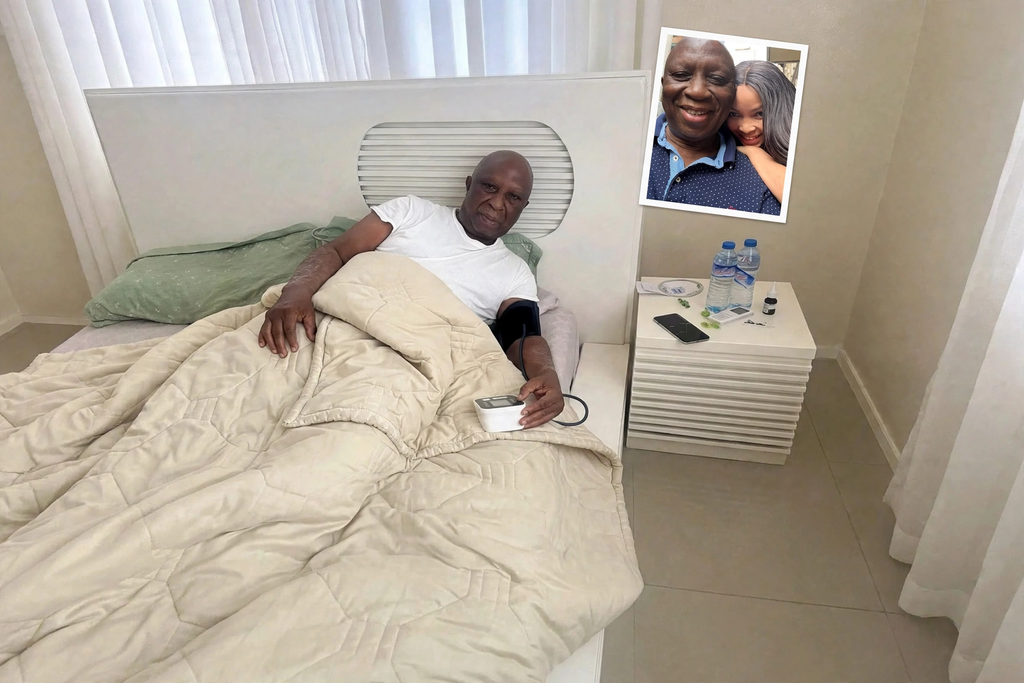
MONROVIA – Samuel P. Jackson walked into court facing manslaughter charges over his wife’s death. On Tuesday, he walked out with permission to leave the country, not to escape the case, the court stressed, but to fight a cancer his doctors call high-risk.
By Willie N. Tokpah
Judge Serena F. Garlawolu of Criminal Court “B” for Montserrado County gave Jackson, one of Liberia’s best-known economists and political commentators, 90 days in the United States for further tests and possible specialist treatment. A urologist has diagnosed him with High-Risk Prostate Adenocarcinoma.
The ruling weighs two things against each other: a sick man’s right to medical care, and the unanswered questions about how his wife, South African lawyer Toni Khumalo Jackson, came to die from head injuries in their Sinkor home in March.
Conditions Attached
The court did not simply let him go. Judge Garlawolu ordered Jackson to produce two qualified human sureties, execute a bond and sign a written undertaking to return to Liberia by February 17, 2027.
The State, represented by Cllr. Isaac Williams, did not oppose the medical request at the November 11 hearing. But prosecutors asked for strict conditions so the trip could not become a way out of Liberia’s jurisdiction. They asked that the court investigate the sureties, approve them, and hold them accountable if Jackson does not return.
The judge agreed. She told the Clerk of Criminal Court “B” to make sure every requirement is met before Jackson boards a plane. Any extension past February 17 will need credible medical evidence and the court’s express approval. If he fails to return without one, the sureties could face legal consequences.
Who Was Toni Khumalo?
Born Ntombikayise Innocentia Khumalo in Gauteng, South Africa, Toni was an attorney and the founder of NK Attorneys. Friends knew her as warm and family-minded, and Jackson called her his “Zulu Queen.”
On March 13, 2026, she died at the John F. Kennedy Memorial Medical Center in Monrovia. By Jackson’s account, she was found semi-conscious in the couple’s bedroom with a deep cut to her head. She was taken first to St. Joseph’s Catholic Hospital and then transferred to JFK.
She would have turned 44 on June 23, which was also the couple’s third wedding anniversary. Months after her death, her body was still in a Monrovia morgue, and her family in South Africa, including her elderly mother, Eliza, was still waiting to bring her home.
From Person of Interest to Defendant
The Liberia National Police first treated Jackson as a person of interest. On March 16, Inspector General Gregory O. W. Coleman announced that he was a suspect.
On April 2, police charged him with manslaughter, negligent homicide, aggravated assault and recklessly endangering another person. Investigators cited witness accounts, photographs and communications that they said pointed to a history of physical abuse in the marriage. They also questioned Jackson’s conduct in the hours before his wife was taken to hospital.
None of these allegations have been proven in court. Jackson is presumed innocent.
Four Nights in Prison, a US$20,000 Bond
After the Special Grand Jury for Montserrado County returned an indictment, Jackson was arrested and held at the Monrovia Central Prison. He spent four nights behind bars. On April 6, Resident Circuit Judge Roosevelt Z. Willie released him on a US$20,000 criminal appearance bond.
On April 13, prosecutors challenged the property valuation bond, arguing the documents did not meet legal requirements, and sought to send him back to custody. On April 22, Judge Willie dismissed the challenge, upheld the bond, and ordered seized property returned to Jackson, including his electronic devices.
The State’s worry then, that Jackson stay within the court’s reach, is the same worry behind this week’s demand for two extra sureties.
The Autopsy That Didn’t Count
The defense’s biggest setback concerned the forensic evidence. Criminal Court “A” had authorized forensic investigator Dr. Rockefeller F. Cooper II to work on the case for the defense. Prosecutors argued that his registration as a Forensic Medico-Legal Death Investigator did not make him a licensed pathologist.
On May 26, Judge Willie agreed. He declared Dr. Cooper’s autopsy null and void and inadmissible. He let stand the rest of Dr. Cooper’s work, including crime-scene documentation, evidence collection, materials analysis, and witness interviews.
The ruling did not settle the main question. The prosecution still has to prove, with admissible evidence, what caused Toni’s injuries and whether anything Jackson did legally contributed to her death.
Waiting for the Reports
The State has also been criticized for delays. On June 23, the day that would have been Toni’s birthday and their anniversary, Jackson publicly demanded the official autopsy and toxicology reports. He said the families could not repatriate her remains without them.
On July 24, prosecutors reportedly asked Criminal Court “A” for more time, saying the reports were not yet in their case file. The delay raised questions about how ready the State was to prosecute such a serious case.
For Toni’s family, the need is simple: to know how she died, and to bury her.
Jackson’s Defense
Jackson has consistently denied causing his wife’s death. He has suggested that some of her injuries may have come from cardiopulmonary resuscitation by medical staff. He has questioned the credibility of the investigation and said authorities are targeting him because he criticizes the government.
Those are defense claims. They do not resolve the charges. The burden remains on the prosecution to prove its case beyond a reasonable doubt.
A Test for the State
The 90-day leave is a test for the prosecution and for the courts. By demanding enforceable guarantees, the State has shown it takes the risk of Jackson not returning seriously. The court has made clear the trip is not a way out of the criminal process.
The larger task falls to prosecutors: keeping the case moving, securing the forensic evidence and making sure Toni’s family is not lost among the procedural fights.
Access to medical care is a fundamental right. So is the public’s right to a credible justice process, in which a woman’s violent death is fully investigated and decided on the evidence.
Jackson is due back by February 17, 2027. Until then, Republic of Liberia, by and through the Ministry of Justice, versus Samuel P. Jackson remains pending before Criminal Court “B.” The allegations are unproven, and Toni Khumalo Jackson’s family is still waiting for answers.
Published by FrontPage Africa
Original headline, article body, author, publication date, featured media and tags are displayed with attribution. Content ownership remains with the original publisher.
Read on the publisher's site